MyQ Community
MyQ Community
MyQ Community
Overview
Community by myQ is a residential mobile application for people that live in gated community, high rise or multi-dwelling units. The app is a part of a larger ecosystem that consists of MyQ residential app and MyQ Business web enterprise platform.
Overview
Community by myQ is a residential mobile application for people that live in gated community, high rise or multi-dwelling units. The app is a part of a larger ecosystem that consists of MyQ residential app and MyQ Business web enterprise platform.
My Role
UX design lead, collaborated with product and research to come up with the initial application platform. Created wireframes and prototypes, part of a dedicate scrum team.
The team
UX Designer
Project Owner
Information Architect
Researcher
My Role
UX design lead, collaborated with product and research to come up with the initial application platform. Created wireframes and prototypes, part of a dedicate scrum team.
The team
UX Designer
Project Owner
Information Architect
Researcher
Problem statement
Community residents need a fast, reliable and secure way to monitor and control the community access points. Also they need to be able to share and schedule access with their guests and keep a record of past activities.
Goals:
👉 access should be remote
👉 access should be traceable
👉 eliminate the need for keys
👉 schedule events and guest access
Problem statement
Community residents need a fast, reliable and secure way to monitor and control the community access points. Also they need to be able to share and schedule access with their guests and keep a record of past activities.
Goals:
👉 access should be remote
👉 access should be traceable
👉 eliminate the need for keys
👉 schedule events and guest access
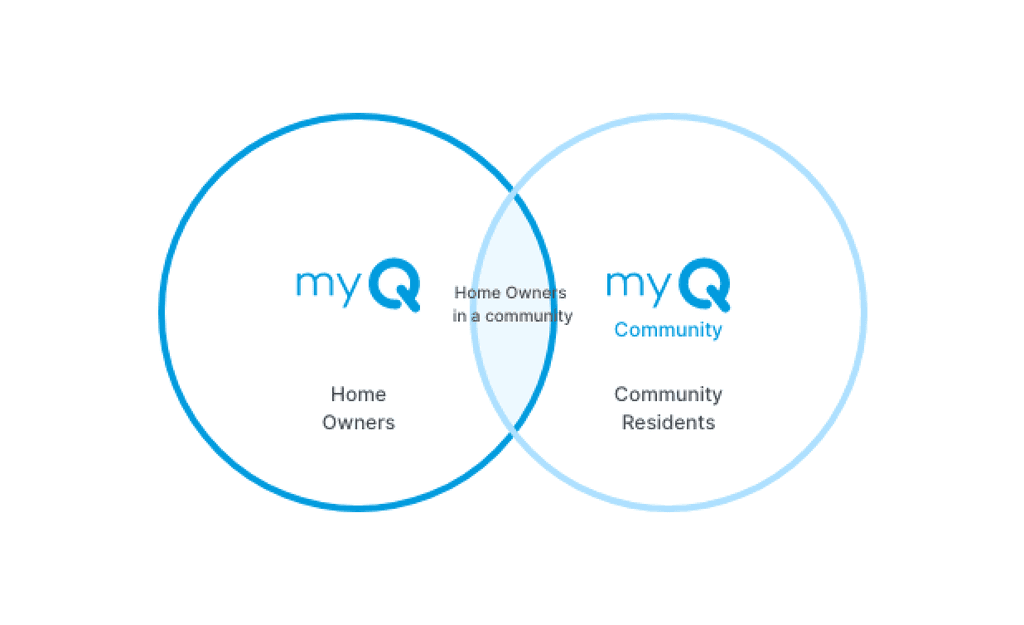
The decision to develop a separate application, distinct from the existing myQ platform, was based on the significantly different use cases between community residents and homeowners. The overlap between the needs of homeowners within a community was minimal.
The decision to develop a separate application, distinct from the existing myQ platform, was based on the significantly different use cases between community residents and homeowners. The overlap between the needs of homeowners within a community was minimal.
Project Goal
Resident app experience:
Phase 1 (MVP)
1. Video Calling: See who’s the gate, talk to them, give/deny access
Phase 2
2. Dashboard: Residents can see/control the access points they’re allows to
3. Guest Invites: Residents can invite guests easily, text guest pass/PIN
Project Goal
Resident app experience:
Phase 1 (MVP)
1. Video Calling: See who’s the gate, talk to them, give/deny access
Phase 2
2. Dashboard: Residents can see/control the access points they’re allows to
3. Guest Invites: Residents can invite guests easily, text guest pass/PIN
Research
Community residents need a fast, reliable and secure way to monitor and control the community access points. Also they need to be able to share and schedule access with their guests and keep a record of past activities.
Goals:
👉 access should be remote
👉 access should be traceable
👉 eliminate the need for keys
👉 schedule events and guest access
Research
Community residents need a fast, reliable and secure way to monitor and control the community access points. Also they need to be able to share and schedule access with their guests and keep a record of past activities.
Goals:
👉 access should be remote
👉 access should be traceable
👉 eliminate the need for keys
👉 schedule events and guest access
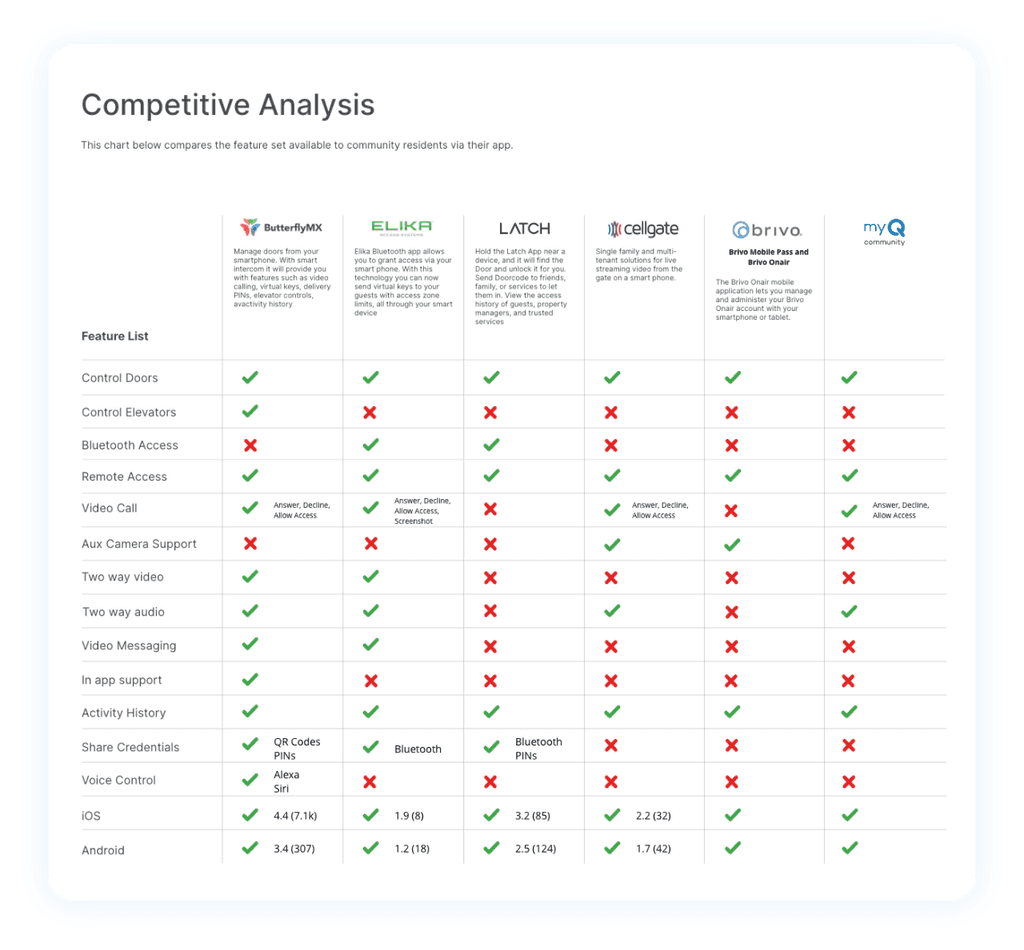
Phase 1 (MVP)
In this first iteration of the app residents are able to create account only if they have a valid invitation from the property management, they are able to receive a video call, grant access and see the history of video calls.
Phase 1 (MVP)
In this first iteration of the app residents are able to create account only if they have a valid invitation from the property management, they are able to receive a video call, grant access and see the history of video calls.

Testing
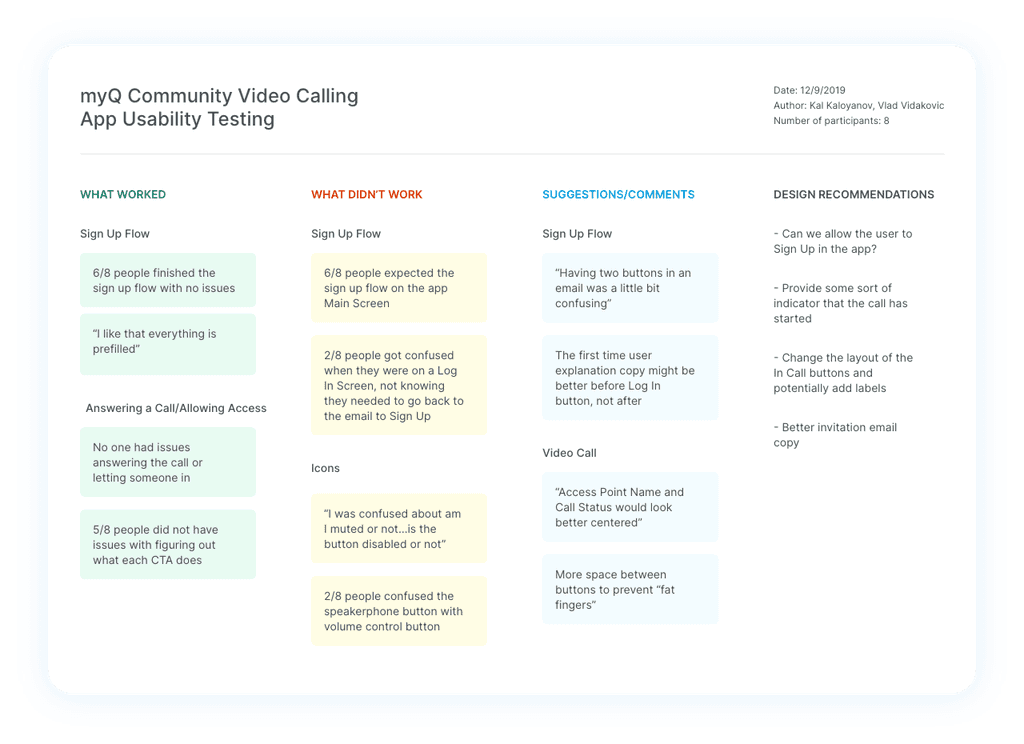
1. Usability testing was done with 8 participants to evaluate the sign up flow as well as the video call experience.
2. A-B testing was done to determinate the final layout of the video call screen
3. Alpha and Beta testing with a few communities
Testing
1. Usability testing was done with 8 participants to evaluate the sign up flow as well as the video call experience.
2. A-B testing was done to determinate the final layout of the video call screen
3. Alpha and Beta testing with a few communities
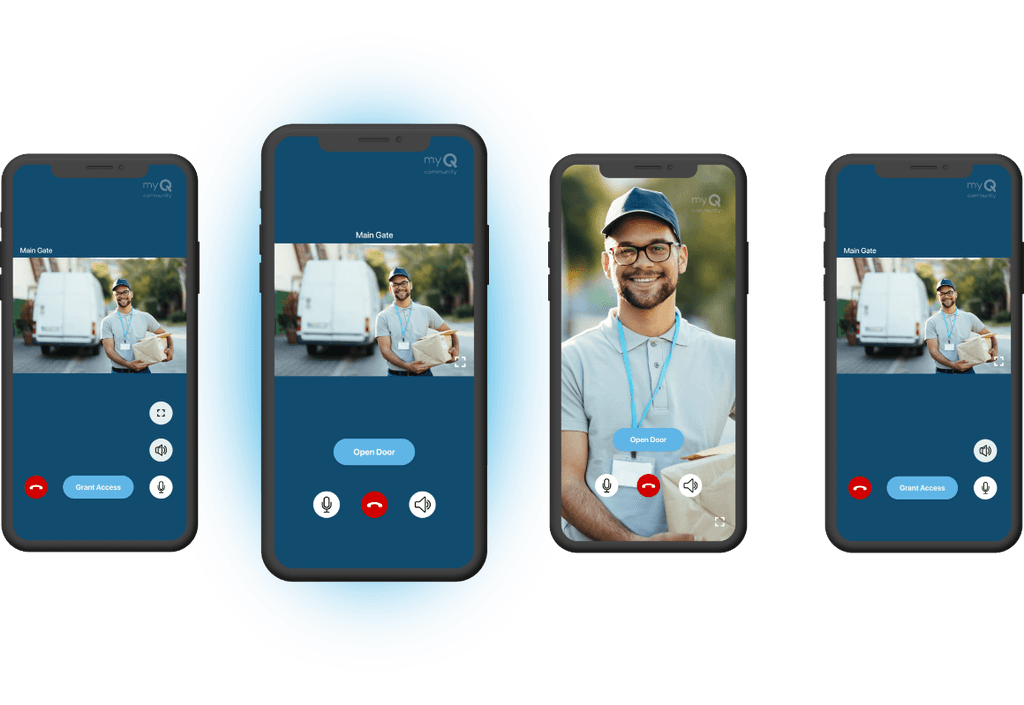
Different variations of the call video call screen
Different variations of the call video call screen
What did we learn after the first phase
1. Due to some technical difficulties iOS users had issuers when signing up for the account, as a result the sign up flow was altered to support account creation without the need for the community invite.
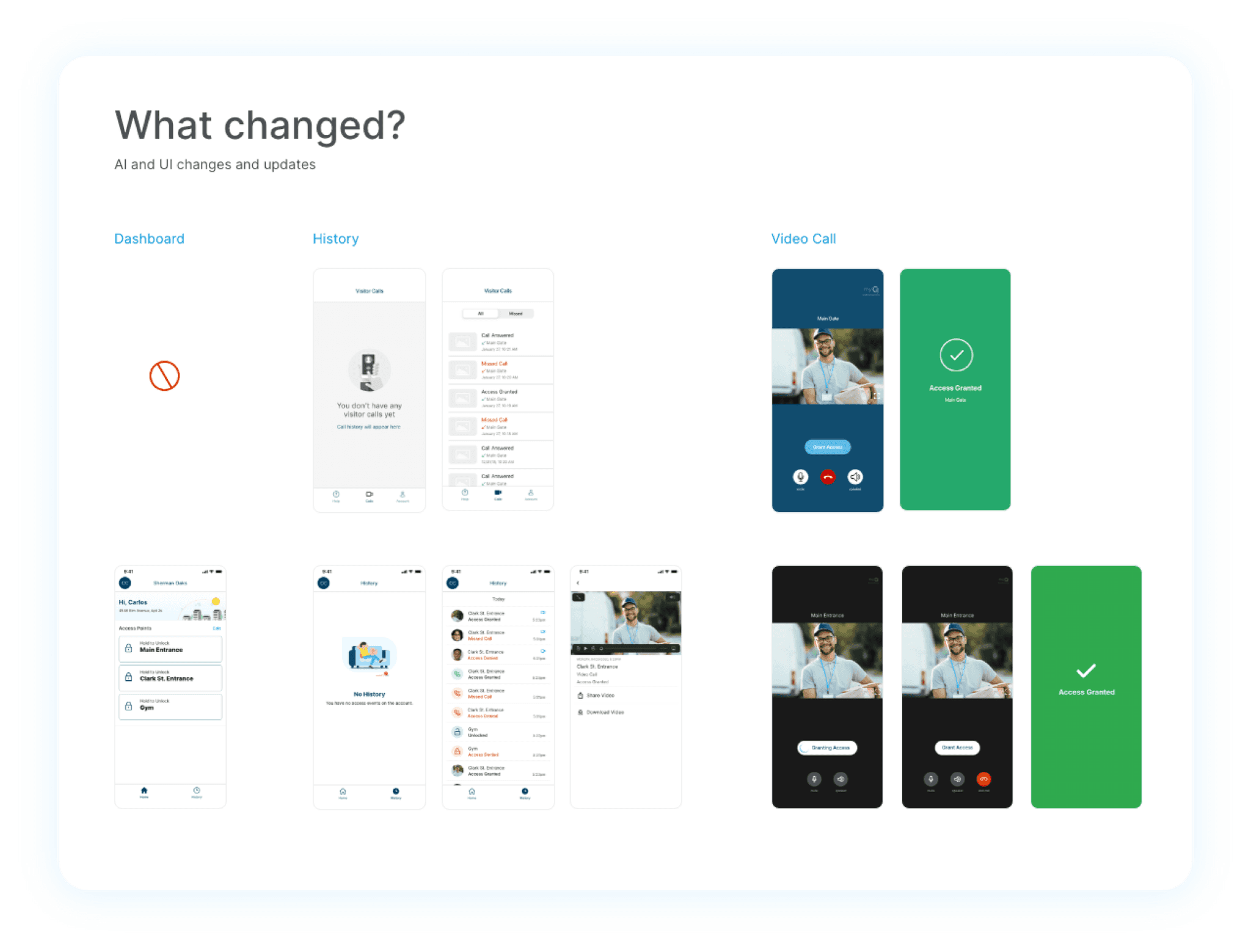
2. During the video call UI didn't match what was really happening, audio was still present even after the UI showed that the call was terminated, that's why additional transitional screen was needed to accommodate for the device "delayed" response.
What did we learn after the first phase
1. Due to some technical difficulties iOS users had issuers when signing up for the account, as a result the sign up flow was altered to support account creation without the need for the community invite.
2. During the video call UI didn't match what was really happening, audio was still present even after the UI showed that the call was terminated, that's why additional transitional screen was needed to accommodate for the device "delayed" response.
Phase 2
In this phase user is able to see and control community access points and invite guests with one time guest pass. UI was completely redone to match the myQ component library.
Phase 2
In this phase user is able to see and control community access points and invite guests with one time guest pass. UI was completely redone to match the myQ component library.
New Sign Up flow
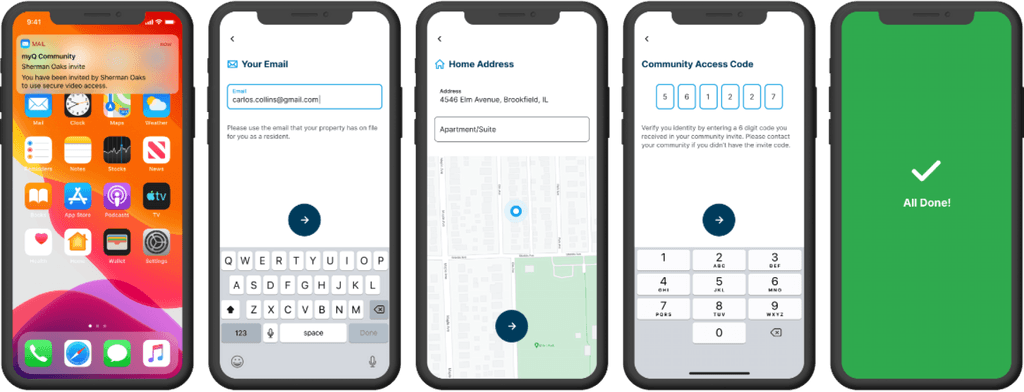
Based on our Alpha and Beta testing results the community app sign up flow was significantly altered. These are the changes that were applied:
user no longer needs an invite to create the new account
updated community invitation email
support for a phone number validation in order to provide more security, easier login and relevant data for myQ business web platform
new sign up flow will be used as a template for a single sign on for all our digital products
New Sign Up flow
Based on our Alpha and Beta testing results the community app sign up flow was significantly altered. These are the changes that were applied:
user no longer needs an invite to create the new account
updated community invitation email
support for a phone number validation in order to provide more security, easier login and relevant data for myQ business web platform
new sign up flow will be used as a template for a single sign on for all our digital products
Video Call Update
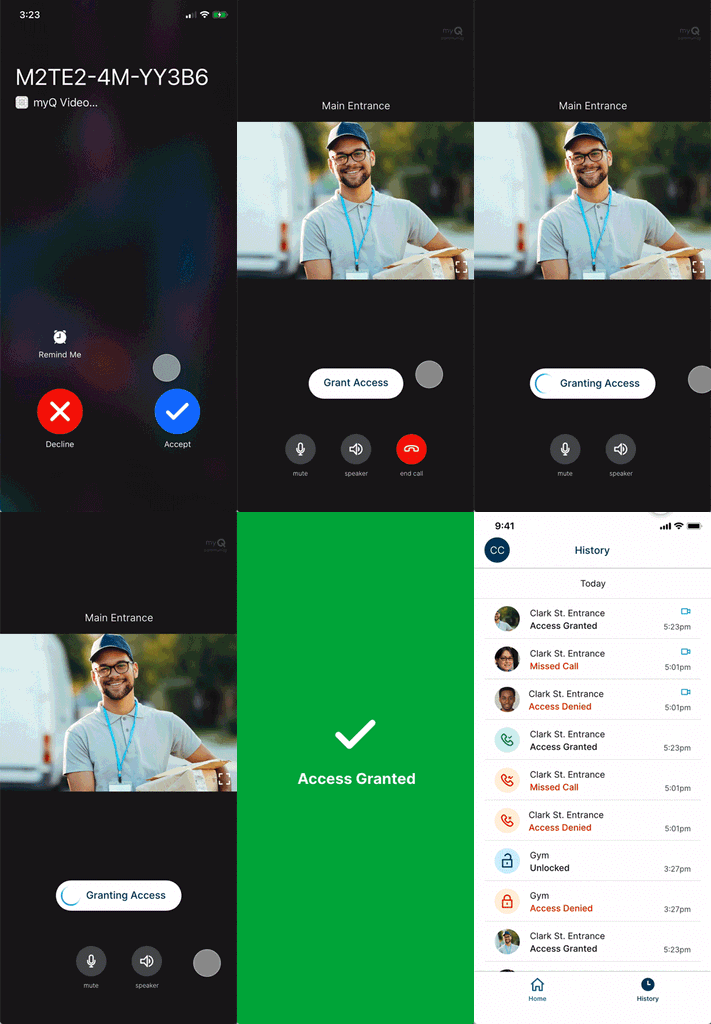
Video call screen was updated with new UI and a transitional state, where the user is able to see and talk to the person on the other side while the command is sent to a device to open the access point. During this transitional state the call cant be terminated, that's why the "end call" button is not available at this point.
Video Call Update
Video call screen was updated with new UI and a transitional state, where the user is able to see and talk to the person on the other side while the command is sent to a device to open the access point. During this transitional state the call cant be terminated, that's why the "end call" button is not available at this point.
Dashboard
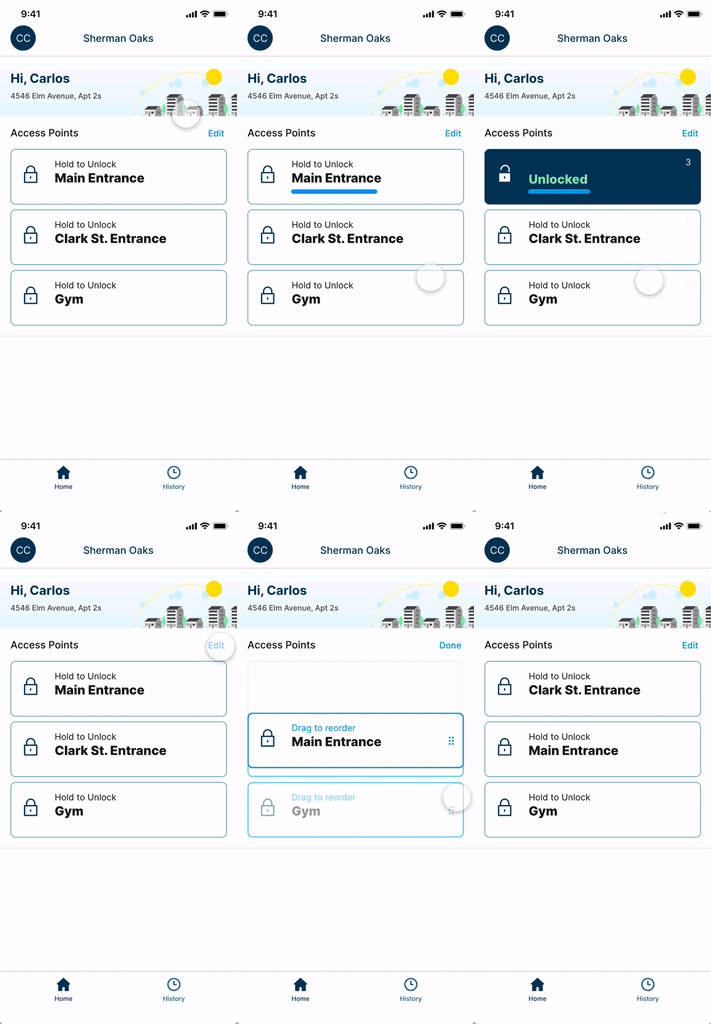
Dashboard is new page, since the first version of the app only had video calling capabilities. Dashboard gives the user ability to control the community access points from anywhere.
Conclusion
The myQ Community project introduced this new app that is part of the myQ ecosystem, which includes the myQ residential app and the myQ Business web platform. By collaborating closely with research, product, and developer teams, I ensured that the app effectively integrates with the existing web community platform and seamlessly connects to hardware devices controlling community entry points.
Conclusion
The myQ Community project introduced this new app that is part of the myQ ecosystem, which includes the myQ residential app and the myQ Business web platform. By collaborating closely with research, product, and developer teams, I ensured that the app effectively integrates with the existing web community platform and seamlessly connects to hardware devices controlling community entry points.
What did I learn?
As a UX designer on the Community by myQ project, I learned the importance of designing an application that fits seamlessly into a broader ecosystem. I discovered how to balance user needs with existing platform constraints, particularly when working with established hardware and web platforms. This experience emphasized the value of cross-functional collaboration with research, product, and developer partners to achieve cohesive, intuitive design solutions.
I also understood the significance of developing in phases to prioritize essential features while planning for future improvements, allowing us to adapt and refine based on real-world feedback. Ultimately, I sharpened my skills in creating user-focused experiences that align with both business goals and technical requirements.
What did I learn?
As a UX designer on the Community by myQ project, I learned the importance of designing an application that fits seamlessly into a broader ecosystem. I discovered how to balance user needs with existing platform constraints, particularly when working with established hardware and web platforms. This experience emphasized the value of cross-functional collaboration with research, product, and developer partners to achieve cohesive, intuitive design solutions.
I also understood the significance of developing in phases to prioritize essential features while planning for future improvements, allowing us to adapt and refine based on real-world feedback. Ultimately, I sharpened my skills in creating user-focused experiences that align with both business goals and technical requirements.